“But how could you live and have no story to tell?”
— Fyodor Dostoevsky
I first encountered Igor Romanovich Sudzhashvili in January 2002 in a stack of official documents translated into English from Russian. He was just a name, and that name stirred no particular emotion in me as we prepared to adopt his son.
In truth, I was preoccupied by the copious paperwork required for an adoption that already threatened to send me into panic mode. I had no time for additional sentiment. I was on auto pilot, skimming information, but interested only in completing required paperwork that needed to be done, yesterday.
From that same stack of paper, Liana’s name had tugged at my heart, as had baby Rostilav’s. They were helpless children. But Igor was an adult. The record stated that he was incarcerated. The mother was charged with neglect. A family was imploding. What responsibility did Igor bear on the unfortunate state of his children? But I had not walked for even an inch in his apparently difficult shoes. I could not judge this man I would never know. God had given me the effortless task of loving his son.
Roma’s stories about his father, unlike the animated, joy-filled stories of Liana, were rare. There were a few, and I will share those later. Mostly, my mother is the one who kept our curiosity alive about Roma’s father, Igor. Many times, over the years, she wistfully studied the handsome features of her youngest grandchild and rhetorically pondered, “Wouldn’t you love to see a picture of his father?”
My mother died in October 2014, two and a half months before we found Roma’s family, and pictures of his father. I thought of her many times when the revelation of the story began. She would have listened eagerly to the details and gazed long at the familiar face looking back at us from the pictures. So often I would start to call her with newly revealed details of our discovery, and then remember she was not there.
Thirteen years would pass before I would learn new and surprising information about Igor. The information would come from Igor’s cousin, Lia. Her family had tried to help from neighboring Georgia when the mother lost custody of the children. They contacted the orphanage with offers to take the children into their home. But they were not allowed to cross the border into Russia to the north. After several attempts to save Roma, they learned of his adoption. He was lost to them forever. Or so it appeared.
Lia’s first messages to me in early January 2015 were praises to God. She called us “heroes” for saving Roma and loving him, and now sharing his pictures and his life with them again. She could tell from the numerous pictures of the smiling boy growing into manhood, he had lived a happy and loved life. Never once did I feel like a hero. Lia confessed that at first, she cried every time she read my messages. I did the same with hers. Our communication was aided by Lia’s nineteen-year-old daughter Elene, who read and wrote English very well.
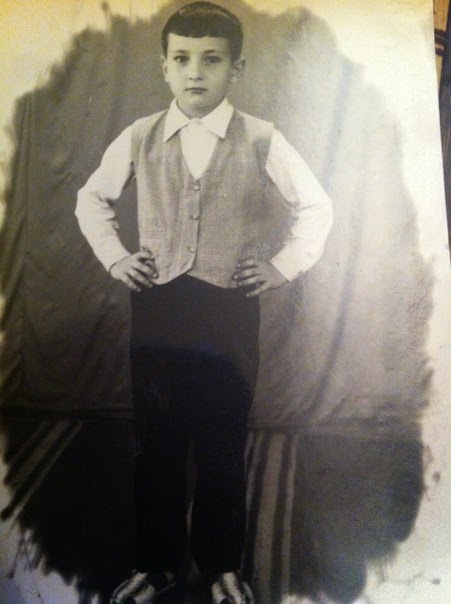
As we communicated, a picture developed of a close-knit family of people of integrity and deep faith. I began to see my son with different eyes. I knew one day this revelation would be of immeasurable worth to his previously obscure identity. He was still caught off balance by the surprising events of locating his first family.
Lia was born the same year as Igor in 1965. She lovingly recalled that she and Igor were more like sister and brother than cousins growing up. Lia’s parents tried to intervene in young Igor’s unhappy childhood. Whenever possible, Lia’s mother, Igor’s aunt, brought him to spend time with them and lavished him with motherly love.
Lia described Igor as sweet, sensitive, stubborn, and difficult at times. I had to smile recognizing traits that his son, my son had inherited. The negative parts of Igor’s personality, she blamed on his painful childhood. Lia’s affection for Igor was deep and genuine. Her loyalty was fierce.

As photos started loading on my computer screen from Liana and Lia, I sat flabbergasted. My mother, who was so curious about this man, could not have anticipated how much Roma resembled his birth father. I sat before my computer screen, face to face with Igor. Roma’s father. This man for whom I had felt nothing beyond indifference all these years sat starring back at me, almost pleading, reaching out to me across the decades. I finally sensed his brokenness and pain.
As Lia and Liana made Igor known to me, my deep compassion for him grew. Such a beautiful young man, so like his son, my son, who he never got to know. A young man filled with potential, and hopes, and dreams. As stories and pictures arrived in my inbox, I cried and cried. I cried for Liana, then Lia. For Roma, and for tragic Igor. And for my ignorance of all the pain and loss. Surprises met me at every corner. By the time I got to know and love him, Igor Sudzhashvili had been dead for eight years.
“It seemed he was doomed from the beginning,” Lia said often, as though her own grief was rekindled. Her words describing her beloved cousin stabbed like a knife in my own freshly wounded heart. The revelation of Igor’s unfortunate life and early death was still too fresh a tragedy for me. The stories and photos continued to filter in, as the puzzle pieces created a story of a beautiful and loved young man who just couldn’t seem to catch a break.
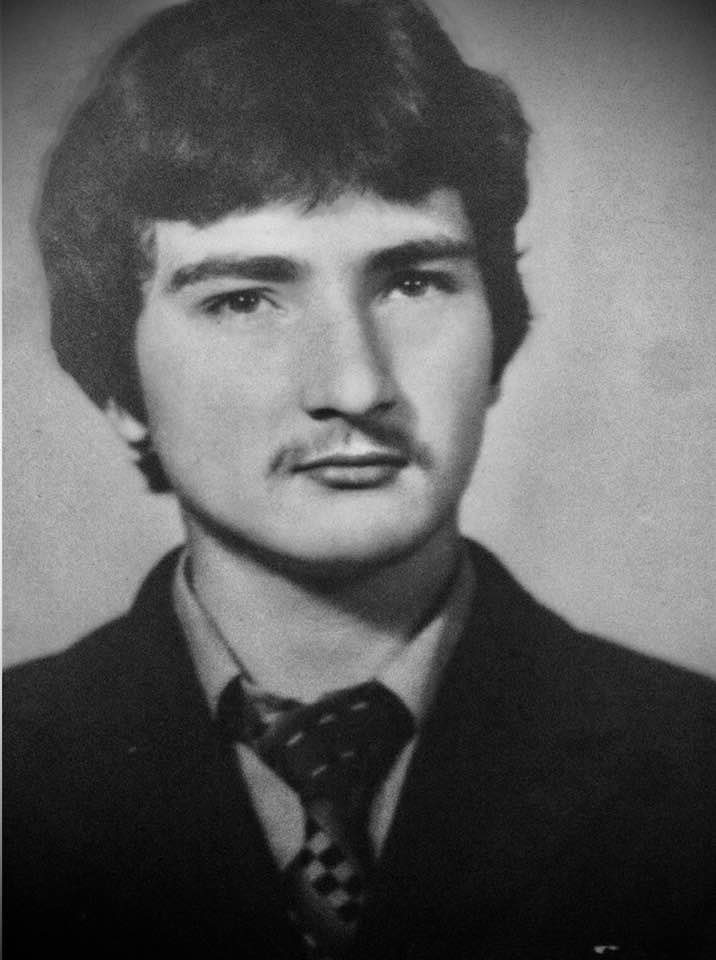
We all know people like that, people who hardly have a fair chance in life. By no fault of their own, misfortune ambushes them at every turn.
For whatever reason, I wept off and on for days, mourning a man who had been dead for eight years. A man I would never know. At first, I read private messages about him translated by Lia’s daughter Elene. Then another first cousin, Zaur, reached out to me, offering what he remembered. Then Lia’s mother contributed her cherished memories of a loved nephew on whom she had lavished motherly love and compassion. Another cousin, a university English teacher, also contributed to the compilation by her careful translations of the recollections of a boy, then a man, who had endeared himself to so many, and whose tragic life and death had broken hearts of those who knew and loved him best. They each introduced me to Igor, all in hopes that we would know and understand him better. I knew this knowledge would one day be a gift to his son.
Continue with Chapter 14
 Consider it all JOY