You make known to me the path of life; in your presence there is fullness of joy; at your right hand are pleasures forevermore.
—Psalm 16:11
“Are you Roma’s mom?”
On many occasions in those early years of Roma’s Americanization, a stranger would lock eyes with me in a public place and make her way toward me. I knew what was coming next. A volunteer from his elementary school, or a teammate’s mother, or a stranger in our community would approach me smiling broadly to inquire about this new Russian boy in our small town. Little Roma had a fan club. Everyone was enjoying his charm and rooting for his success.
I would smile and grimace with feigned worry. “Maaaaybe. First tell me what you know about Roma. What has he done?” We would both laugh. The scene was predictable and repeated often.
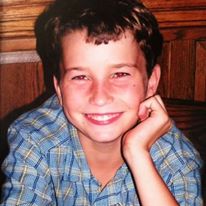
I knew they, too, had fallen under Roma’s spell. We all did. He was magical. Who could resist that impish freckled face and those twinkly green eyes, his “innocent” smile that warned of playful mischief. His unexpected assertiveness revealed his self-confidence and courage. An extreme extrovert, Roma invited everyone into his life. His big open heart loved everyone he encountered because he boldly, and usually correctly, assumed they loved him. He was Roma, the boy who needed no last name. He was my son, given to me in the most supernatural manner, by a direct, shocking instruction from God. I didn’t accept the mandate initially, but by the time I acquiesced and Roma was with us, my fear of surrendering to God’s plan had abated. I trusted God and was overwhelmed with both adoration for this boy and amazement that God had chosen unworthy me for this assignment. Incredulously, God had revealed Himself to me through a child from halfway around the world. When fun and feisty Roma pried opened my heart, God walked in with him.
It was evident that the newly imported seven-year-old was endearing himself to everyone in his sphere of contact. On those occasions in the early years, if Roma broke a rule at school, or crossed a line, he got a pass. He was so dear, others made excuses for him. My parenting skills weren’t scrutinized. I got a pass from judgment. More than a pass, we got a meritorious award because we “saved” him. Others could not understand the magnitude of their misunderstanding. The fact was the opposite–God used him to save us.
Roma. This little boy, who I had tried so stubbornly to refuse when God came after me with startling and unambiguous nudges to adopt, had stolen my heart. With the angst of surrender behind me, I was enjoying the experience of being transformed by the living God. I was enjoying the extravagant gift of this most unique and brilliantly shiny little person. My youngest son. Roma was all light and love. I marveled at how grateful he was about simple things and that he rarely demonstrated a temper. He seemed to have no residual scars from what must have been a traumatic early childhood. Removed from his first family at age five when he was found on the streets of his Russian hometown begging for food, Roma truly started out with a “hard knock life.” The image of him alone and begging broke my heart when I first read those words in his profile. Once I knew him, I could clearly see how he had been designed for this task. “Visiting” his friends in the neighborhood, comfortable enough to request that his needs be met, and never being a victim of his unfortunate circumstances, Roma perfected the skill of self-endearment while learning to survive.
It was almost as if I imagined Roma had been born the moment I first laid fearful and adoring eyes on him as a seven-year-old. A local adoption agency annually brought a half dozen Russia children to visit, hosted by local families, and most were eventually adopted, not always by the hosting families. The five days of hosting help the adoption agency get to know the children better and place them with compatible waiting families. The children were told they were having a vacation and not that they might be adopted.
Before the 2012 ban on Russian adoptions, an average of 95 Russian children were adopted by American families each week. We hosted Roma in November, 2001 for five long and exhausting days. The fact that we were not committed to adopt him had initially comforted me. But Roma stole our hearts. I couldn’t imagine the possibility of a history of neglect or any “issues.” I wanted to ignore any previous deeply entrenched trauma that might impact the future of this innocent child. I was keenly aware that any problems he might have would affect my wellbeing and that of my original family, that of my beloved children. When Roma joined our family, Heather was 20, Kellie, 18, and Taylor, 12. My husband Bruce and I had been married 23 relatively easy years.
A very long and exhausting trial week it was of surrendering to a God who had an assignment for me that I did not think I wanted. I had only agreed to host for five days—not adopt. But by the end of that week, Roma owned our hearts. That would be his life’s pattern, collecting hearts. So, in April, 2002, we went to Russia to bring Roma to his new home with us.
People were always telling us what a great job we were doing in raising our new son. He was so polite, shaking hands firmly, and looking adults in the eye. But we quickly confessed that this was how Roma came to us. Somewhere along his early childhood years, Roma was taught these manners and pleasantries which delightfully complimented his hardwired winning, charismatic personality. Yes, our Roma had gifts. He was a remarkable boy who arrived in a supernatural way.
There are many stories I could tell about Roma’s childhood. I shared many in the first book. As I try to illustrate his heart and character, one story, when he was in sixth grade, comes to mind. A boy moved into our neighborhood a couple of years after Roma arrived. I’ll call him “Rocky.” He was a chubby boy with a crew cut. We were glad for a new playmate in our rural neighborhood of 20 houses with no children Roma’s age. Soon, Rocky started belittling Roma and harassing him. I tried talking with Rocky’s mother, but that did not help. Oddly, Roma seemed oblivious to the boy’s taunts. Roma would head out after school, a ball of some size and shape in his hand.
“Where are you going?” I would ask.
“Over to Rocky’s.”
“Roma!” It was hard to remove the agitation from my voice. But Roma would cut me off.
“Mom, I don’t care if he’s mean to me. I just want to play.”
When the bullying escalated, teachers stepped in, and Rocky was suspended from school for a day. I was very upset. But not Roma. He would lecture me on how I needed to forgive, and we were going to start over as if nothing had previously happened. A clean slate, Roma suggested to his unforgiving and stubborn mother. We started over many times. Roma never seemed bothered by Rocky’s behavior like I was.
The culmination of my anger toward Rocky came on a spring evening. Bruce had come home early, and all the older kids in the neighborhood, had converged on our large back yard for a game of baseball. I watched from the deck. I saw Rocky inch toward the edge of our yard, baseball glove in hand. Roma looked up toward me, then back at Rocky. “Hey, Rocky, you wanna play?”
Rocky didn’t answer but put his head down and ran into the outfield and played until darkness drove all the reluctant players home, and my guys in for dinner.
“Mom, I hope you aren’t mad at me for inviting Rocky to play. I feel sorry for him.” My boy’s compassion touched me. “You did the right thing, Roma.”
Who was this strange boy? Whose genes did he inherit? They were not mine. While I was becoming a judging mom of offending, insecure children, Roma was eager to forgive, seventy times seven. He was ready to “start over” with the offender, after each offense while remaining unoffended. Roma never held a grudge. He was not easy to raise because he was independent and often stubborn and bossy. But it was impossible not to adore that child. His charisma was legendary. His sense of fairness was black and white. And he could dig his little heels in. But so could I. God gave me a sense that raising Roma would require more structure and consistency than my older compliant, rule-following, children had needed. Roma was almost like an only child because our daughters were ten and twelve years older. Taylor, five years older, shut himself off. He had hoped for a little brother who would follow him around, play games with him, and for whom he could be an admired role model.
When Roma burst on to the scene at our hosting in 2001, Taylor was caught off guard. We all were. We were accustomed to gentle children who read books and drew intricate pictures and built complicated castles with building blocks, children who played quietly in calm, imaginary realms. Roma was no such kid. He was loud—– his voice was loud, his expressive sound effects for play (usually exploding noises) were louder, his laughter was loudest. He was very active. He was unusually assertive and confident for one so young. He didn’t sit still long, and if a sport didn’t involve a lot of people and a ball of some size or shape, he quickly lost interest. Roma immediately joined clubs at school, before he could speak (or understand) English well, because he didn’t want to miss anything. The other kids might be having fun without him. He didn’t seem to need us.
As his new family, we had to quickly adjust our formerly quiet life to his high level of maintenance and demands for action and attention. He was not the little brother Taylor had envisioned. Taylor had enjoyed the coveted baby-of-the-family role for twelve years. Suddenly his secure realm had been usurped by an independent, confident, and charming little dictator. My heart often ached for Taylor, but any attempt to give him additional attention was met with resistance. He did not appreciate our attempts. He seemed mad that we offered him crumbs left over from the attention and adoration bestowed on his new brother.
I had to remind myself that God wasn’t surprised by Taylor’s reaction. What could we have done differently? I loved Taylor more than ever, now that I knew God better than before. I had to hope that eventually Taylor would recognize that fact and understand the inescapable situation in which his mother had unexpectedly found herself. I felt directed by God to adopt, and therefore, how could I disobey?
Despite my joy in bringing Roma to our family, I was struggling too.
By the time Roma was in middle school, years that would bring even more challenges, Taylor was halfway through high school and enjoying independence that a job and a car afforded him.
Roma’s “assertiveness,” which often resembled bossiness, and his “self-confidence,” which could be confused with cockiness, kicked into high gear in middle school. I had been a substitute teacher for a few years, and I recognized this attitude was certainly not an anomaly with boys that age. But I had a “not my baby” wish. It was an unreasonable hope, considering Roma’s extroverted personality. Those years were a challenge, although he continued to excel in school, especially math, and all sports.
I had always attended teachers’ conferences for my children. What a joy it had been hearing praises about my over-achieving older kids. Meeting with Roma’s teachers was a different experience. His teachers had often taught my three older children. Never once did I hear that my original three were “too social” in class. But I knew that chastising chatty Roma would do little to change him. His personality was outgoing, always was, always would be.
One teacher gave me a new prospective. “Roma is doing well. He smiles a lot. He seems very happy. I sense your worry about him. You know, he is not the unusual student. Your older children were.”
Another teacher greeted me as I sheepishly grimaced and introduced myself. “Roma . . .” She began with a sigh. “Roma makes me want to pull my hair out.” Fortunately, she didn’t pause too long while I shifted uncomfortably. “But I love having him in my class.” I quickly confessed that was exactly how I felt about Roma too.
Only one person, a teacher at those middle school conferences, ever asked the question that many must have been thinking. A veteran no-nonsense teacher who had previously taught my three older, calmer children, now had her hands full and her patience strained with my charming, exuberant, bouncy Roma. “Do you ever regret adopting?” she asked.
I was thankful the answer was a million times “No.” No regrets. A lot of challenges, a lot of personal growth, and even more joy. But never regrets.
Because of Roma, I was being transformed. I could only be grateful for that.
Continue with Chapter two


I’ll never forget My first time meeting Roma. It was our first day in the neighborhood and he was bouncing his basketball. He dribbled it over to our house and introduced himself very politely. He was charming, assertive, handsome and chatty. You are on your way with chapter 1…I’ll be here waiting for the next one. Great job friend!
LikeLiked by 1 person
Thanks, Kim. So as a reader who knew Roma in real life, you can confirm my descriptions. That boy had gifts. As a matter of fact, HE was the gift! Correction— he IS always the Gift.
LikeLike
I am teary-eyed reading your words again, Debbie. I am so thankful that God gave you the “it’s time” signal to begin this next book. Your honest writing has always gone straight to the deep places in my heart. And I know that so many others will be moved by God’s story in your life through Roma. I am so longing for that reunion day in Heaven, when I can thank Roma for bringing us together through his story. Blessings and love as you continue, dear friend.
LikeLiked by 1 person
Thank you, Bettie. Roma’s story has brought me the best friends. I know he’s proud of himself! 💙
I often think of Robert Frost’s words: “No tears in the writer, no tears in the reader.” So thanks for sharing my tears.
Thanks for your prayers snd encouragement, dear Bettie!
LikeLiked by 1 person
I love your story. Roma reminds me of another boy I knew many years ago. His mother was my friend. He had the same sparkling eyes and brought joy to those around him. You received a special gift. By writing, you share your gift with many others.
LikeLiked by 1 person
Thanks for reading and sharing your thoughts, dear Lisa. I often imagined that God had placed little “Romas” throughout the world to change us all. I still believe that. I feel so blessed that I had that gift in such a personal way as to have him as my son.
LikeLiked by 1 person
Tears. Oh how our God loves us all and honors His uniquely made creations. I love God’s heart in you for each of your children, Debbie.
“When fun and feisty Roma pried open my heart, God walked in.” Love this. I think this is His favorite way of working in us: prying our hearts open in surprising ways to delight us in His love.
LikeLiked by 1 person
Thanks for reading, and always encouraging me, Anna. Getting back to Roma’s story I feared would be like opening an old wound, but it is nothing like that. I just marvel at the beautiful story God has given me, with a sad episode. God’s story never ends in ashes! And that’s a great reminder for me right now. When the whole world seems upside down. I often think that Roma is safe, stored up in Heaven.
LikeLiked by 1 person