“Truly great men must, I think, experience great sorrow on the earth.” —Fyodor Dostoevsky, Crime and Punishment
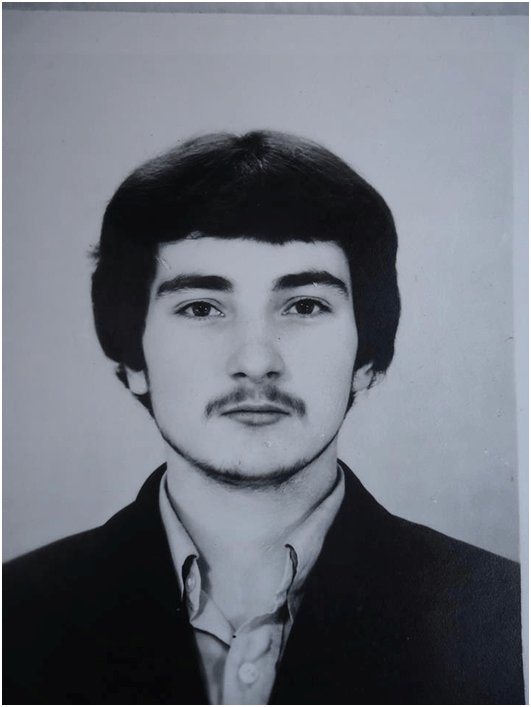
The tears I shed for Igor surprised me. I studied his handsome and solemn features often as family members sent new photos of eerily familiar Igor. I would never know him, but my compassion and yes, even love for him was strong. Igor was now my family. A tragic remnant of my son’s past, my son who I loved more than my own life.
The love I had for Roma had initially surprised me too. When God called me to adopt him, I was more than resistant. When I finally surrendered to God’s persistence, I thought I could care for him and set him aside and not make myself vulnerable enough to love him like my other children. How could I love a child who came to me at age seven, almost against my will, who was not born of me. How could I love him like I did my older biological children who I had birthed and loved before they were born? But I did. And knowing his secret history, his ancestry, fascinated me on a level I didn’t expect. His father had suffered wounds I couldn’t imagine. He had lost a child, first to death, then he lost his family through incarceration, and finally lost a son to adoption. His tragic childhood, his unsuccessful struggles to provide for his family, the death of a child, the prejudice of the attackers and the accidental killing, his early death—I understood Lia’s comments that Igor seemed doomed from the beginning.
In the late 1990s, outside the prison walls, Igor’s struggling family faced a different kind of imprisonment. Marina gave birth to another son, Rostilav, in December 1999. Her boyfriend, the man Roma thought was his father, was taken from the family by police for the violence that neighbors reported. Emotionally fragile and desperate Marina was unable to cope, with three children to feed. She turned to alcohol and, tragically her short-term escape got out of hand.
In March of 2000, Liana, fifteen, Roma, five, and Rostilav, only three months, were suddenly removed by the authorities from their home. Coincidentally, (I think not!), this was the same time God whispered “adoption” to my stunned and resistant heart. Concerned neighbors had reported that Liana and Roma were often on the streets, begging for food. Not unlike his own painful childhood experience, Igor’s children were delivered to an orphanage. Marina was charged with neglect. Frightened and helpless, Marina had to appear before a judge and answer the charges. She had ten days to get a job and straighten out her life, or parental rights would be terminated. Ten days came and went. Marina lost her children.
Cousin Lia learned the location of the children during a rare phone call from Raisa, Igor’s stepmother. As mentioned earlier, she had remarried after Roman, Igor’s father, died of cancer in 1987. Raisa was not able or willing to help rescue her step-grandchildren from the orphanage.
When Igor learned of his children’s desperate situation, he still had nine years of his sentence to serve. Despair overwhelmed Igor, as he was helpless to intervene. Beloved Lia would help. He knew he could trust her to save his children. Lia tried to help from Georgia, but roadblocks met her at every turn. The political hostilities made it impossible for Georgians to cross the border into Russia. Even though Lia was related and had the means and the desire to take the children into her home, she was not allowed.
By 2001, Liana had aged out of the orphanage and attended a trade school. No one thought they would be in the orphanage that long. Surely this was temporary. Liana, now 16, did the only thing she knew to keep her family together. She marched back to the orphanage as often as she could to visit now six-year-old Roma.
Meanwhile Igor, remembering his months spent in an orphanage as a child with his sister Eteri, must have raged in raw helplessness to save his son from harm. His own father had come for him. Surely soon, his children would be rescued. They could be returned to family where he could join them when he was released. Of course Marina would be able to get them back, and he could bring them to Georgia, and they could survive as a family. Almost half his sentence was behind him. His behavior in prison was exemplary—he did nothing that might prolong his stay. Some days he could be hopeful. Others, he was despondent. He tried to cling to the hope that Lia would prevail.
Lia was still fighting to be Roma and Liana’s guardian in Georgia when Roma suddenly vanished. He had been adopted and taken to America. They were refused further information. The door was slammed shut. Little Roma was lost forever.
Igor died in November, 2006 of cancer at the age of 41. Lia reported that losing his son to adoption was the worst grief of his life. When it was apparent that his life was near the end, Lia and his family pleaded with the authorities to release him from the terrible conditions in the prison and allow him to die in peace at home, surrounded by his loving family. But the request was denied. He was buried beside his father in Tbilisi in the family plot. All his heartbroken relatives attended his funeral and later, held a party to honor his life.
I have mentioned that Roma shared only a few stories of his father. Unlike his happy recollections of his doting and loving sister, his memories of his father were dark and frightful. Shortly after he became our son, he was eager to point out a steam radiator in an older home that was a reminder of a memory.
“This what Papa pushed me and hurt my head. Blood. Hospital.” Roma’s new English was insufficient to tell this story, so Roma, always the dramatist, was demonstrating how his head bounced off the radiator, complete with “crash” sound effects. He spoke, and acted, matter-of-factly, as if he were telling a story of someone else’s life. He was not saddened by the memory.
I, on the other hand, was crushed to the point of tears by my little boy’s memory. I could not protect him from that abuse. I knew these memories left scars on my young son. I was glad there were happy memories of love too. I listened with mixed emotions to his cheerful tales of dear Liana who so sacrificially loved her little brother, happy because he had experienced love, and sad because she had experienced loss. I had prayed for all his Russian family members before I knew their stories, people with whom he had lived for five years, whose lives I knew could not be without their own share of grief.
Roma had few other memories involving this man he called Papa, other than someone, maybe the police, had come and taken the angry man away one night. His memory was of a violent confrontation.
Over the years, Roma didn’t want to talk about his father, so I had to let it go. As he got older, I would tell Roma that I prayed for his family and suggested it might help him to do the same, reminding him that everyone makes mistakes, sometimes really bad ones, and everyone deserves forgiveness. I wanted Roma to find healing in forgiving them.
In the first few years of our time with Roma, I often wondered how his Russian family was doing. I had no information of the extended family I was just now discovering. I hoped that their period of chaos and loss had been a temporary condition, that unfortunately had severe and permanent consequences. I prayed that God would give them peace, and a supernatural understanding that Roma was well and very loved.
From 2001 until early 2015, I knew little of his mother, and the father was only an unsettling mystery. Once I learned from Lia that Igor had never met his son, the “papa” that Roma remembered was not his papa. I knew this was an important treasure in the unfolding story. I chose my time carefully for the reveal, when Roma wasn’t dashing off from home, as usual.
“Roma, what do you remember about your father?” I asked when I knew the truth. Knowing I had learned so much about his family, and I was sharing new information with him daily, Roma’s body language told me he did not want to know about his father before his words confirmed it.
“I hate him. I don’t want to know about him.” Roma was insistent that he was not interested in this man he thought he knew.
“Roma, the man you knew was not your father.” His quick glance told me he was interested.
“Wait.” Roma froze, processing this new truth. I waited for him to continue, but he was staring back into a different lifetime.
“Roma, the man who hurt you was not your father.” I repeated. “Your father never saw you, except in photos.”
He never looked at me. But he repeated, “Wait . . . Mom, I have to think about this.” He was quiet for many seconds. “I have to remember . . .” His green eyes darted, and I knew he was conjuring all memories of this man. He was digging deep into a buried childhood. Then his shoulders slumped, and he slowly exhaled. I fought tears, but a few rolled down my cheeks.
“Roma, that mean man was not your dad.”
What a precious gift for Roma to know this truth. He let go of something I couldn’t quite put my finger on. Was he relieved to learn that violent man’s blood did not course through his own veins? They shared no DNA. Did he dare hope that his real Papa loved him and would have done anything to save him, had it been in his power to do so?
After that Roma lingered longer over my shoulder as I shared photos of his father. Studying the familiar eyes looking back at him, father to son, finally, he would look away and shake his head with the weight of all we had learned.
“Mom, it’s like looking into a mirror.” But even with the shocking resemblance, I never saw the glint of joy in Igor’s eyes that was his son’s trademark.
I praised God for giving my Roma this priceless gift of wholeness and identity.
Continue with Chapter 16


It’s so amazing to me how God had you praying so fervently for Roma’s precious family and how God filled you with His love for them and for Roma, giving you details of his story at various points. I can only imagine how deeply that piece of information must have blessed Roma and how heavy that weight must have been before it was lifted. Such a legacy of prayer – of Christ’s intercession through you. It convicts and inspires me. Thank you for continuing to share here, Debbie: it is such a blessing.
LikeLiked by 1 person
I was so caught up in the revelations we were getting so fast about Igor and the whole family. The bond was immediate and so strong. And it surprised me so much. I knew God had made it all possible, and it was such a blessing to me, Roma, and all the people I couldn’t help but share the miraculous news.
LikeLike
That’s beautiful, Debbie. God sure knew what He was doing in speeding it up, as He did. Everything has an appointed time. Thank you for reminding me of that.
They sure did suffer through so much. But I guess the last shall be first one day. Eternal redemption will be so incredible, won’t it. No more tears.
LikeLiked by 1 person
And I wanted to ask you something: do you have old journals where you recorded your prayers for Roma’s family? I ask this because in the verse I was just praying (Mark 11:24) the “things” God says we will have if we pray, being persuaded by him (belief) to lay ahold of them by aggressively accepting what God has spoken to us (receive) are defined as:
“one piece at a time making up a whole”
Which makes me wonder if by looking back you can see even more of the whole picture. Curious 😊❤
LikeLiked by 1 person
I wish I had old journals like I kept years ago. The computer blog became my journal. As I edited the outpourings, the original thoughts disappeared. Keep writing in your paper and pen journals, Anna.
LikeLike
Do you still have those old journals? It would be fascinating to see if God wasn’t already speaking to you even then of all to come.
LikeLiked by 1 person
The last two moves we made cleared out a lot of things I had saved. But God gave me a good memory. I can look back to my childhood and see ways God prepared me for exactly where I am. Like Sacred Echoes throughout my life. The older I get, the clearer I see it. As I approach Heaven more swiftly.
LikeLike
Oh Debbie: we need to do a Skype call some time. I would so love to hear mord about those memories. You are such a gift of encouragement from God. So so thankful to God for you xoxo
LikeLiked by 1 person
I’m thankful for you too, dear Anna! I’ll never understand how you stumbled across my blog also seven years ago all the way from the Netherlands! Except God! Yes, let’s talk! Let’s not wait until Heaven to finally chat!
LikeLike
Sorry for all the separate comments – but I just had to add that I so believe your fervent love for Roma’s family was in part birthed by Christ arising in Igor in his final days. For the less we become, the greater Jesus becomes in and through us. In those final days of his life, oh how Jesus will have poured out His anointing oil upon Igor as he prayed, giving him HIS prayers to pray. What a day it will be when you too get to meet Igor in heaven.
LikeLiked by 1 person
Roma entered the orphanage in March of 2000. That was the same time the Holy Spirit stunned me by whispering “adoption.” Once I found the family and learned about Igor’s plight, I felt such a connection to him, and felt the humility that my family was the answer to his prayers for his son. I’ll address that more in the next chapter.
And perhaps my heart broke for pain of losing a child to death. I didn’t know, but God did, that I would also share Igor’s grief for his next child’s loss.
LikeLike
That makes me think of what you said about God weaving His people together. He’s weaving us together into eternity.
LikeLiked by 1 person