“We need never be hopeless because we can never be irreparably broken.” —Albert Einstein
Roma never held a grudge. He never doubted for a moment that we were his strongest advocates, that we loved him with a fierceness that made him feel safe. Never did he behave as a victim of his unfortunate circumstances. He called me the day after we told him he needed to find another place to live, to fill us in on his newest evolving plan. He made it clear this was his idea to leave, not our reluctant insistence that he find another home.
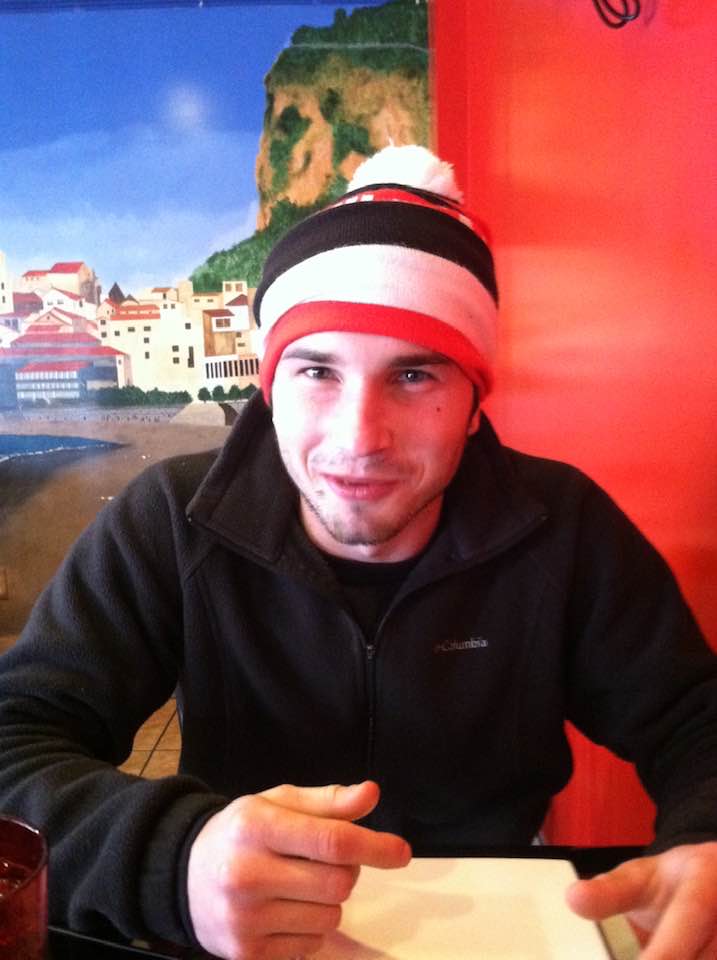
He was moving back to Atlanta. Beyond that, he had nothing. Despite the incompleteness of his idea, I was relieved. I hoped he was returning to be a part of Passion City, the church he had attended while in Atlanta the summer before, and immerse himself in the Passion community. He had so recently been invigorated by finding his birth family and attending Passion 2015, just three months earlier. Now he was restless again. I warned him that boredom might cause him to fall into destructive habits again. But he was determined. He didn’t even ask to take the car we had for his use, or money. All he requested was that I drive him to the metro station, 40 minutes away to catch an overnight bus to Atlanta. He had money for his ticket.
I agreed. We talked the entire trip. Roma and I had never been at a loss for conversation. When we arrived at the metro station, Roma asked me to pray for him. We held hands, standing in the parking lot. I prayed and then he prayed. Then we hugged long and hard, and off he went on another reckless escapade.
Yet, a load of responsibility lifted as I watched him disappear into the tunnel, his well-traveled duffle bag under his arm. Roma feared nothing. I was proud of his assertiveness but concerned about his impulsivity.
Roma and I had both witnessed God’s protection in miraculous ways. It would be a sin to worry about him. God met him around every corner in the past. I had to trust God would go after him this time.
In the weeks after Roma hugged me and disappeared into a tunnel at the metro station on that evening in late April 2015, he seemed lost to me. He was evasive about his plan. When friends would ask about him, I told them I had turned him over to God and would not worry about him, because he was in capable hands. Did I really trust God? Did I believe what I claimed to believe?
One empathic friend asked me why I didn’t just make him come home and go to the community college. I would have gladly handed him over to her, if I thought she could have made it happen. One didn’t just make 20-year-old Roma do things. I could preserve my sanity only by allowing him his opportunity to succeed or fail. And I had to be prepared for him to fail.
Other than scattered texts and phone calls, I had little knowledge of what he was doing. He seemed beyond my reach. He wanted to do this, whatever this was, on his own, as though he had something to prove to himself. We had been down this familiar path too many times before. It had been scary and painful, but hadn’t God always shown up? Like the father in the story of the Prodigal Son, we were powerless to save Roma from his poor choices. The only way he would learn anything was to endure consequences of his actions. “Consequences” that might ruin Roma’s life scared the daylights out of me, and I wanted to protect him from himself. But just like the father in the story Jesus told in Luke 15, we would let him go, and eagerly watch the horizon for his eventual humble and repentant return.
This time I didn’t have a friend like Nancy to provide regular updates, to take Roma to church, include him in their family events, to fill in the “mother” role in Roma’s life. Like me, Nancy didn’t have contact with Roma this time either. Nancy and I were still very much in communication. Although we had only met once in real life, at Roma’s disorderly conduct county ordinance case in July 2014, we were thoroughly bonded from our hundreds of private messages, texts, phone calls, etc., as we marveled at God’s activity in our special boy’s life. She confirmed the decision to let Roma go by her own conviction to do the same. She had also been a safety net for Roma in Atlanta the previous year. She shared that God had also moved her to remove any protection she had provided for our sweet and clueless boy. Roma had no malice. The malady he most suffered was a blindness assurance that he knew what was best for himself, and we were holding him back. He was now on a dark and lonely road.
Before long, I got a call from Mark, the leader from the Idaho retreat. Apparently, he was in contact with Roma. He was eager to mentor Roma. He reminded me that God had called him to work with Russian kids. His story was like mine, as he too questioned God with a “God, you’ve got to be kidding” reaction to his Call. He shared his opinion that only one in ten Russian adopted kids he had encountered in his “mission work” would be a functioning member of society, their trauma was so severe. And only one in 20 would have a successful, fulfilling life. He thought Roma was in the enviable “one in 20” category. Mark was soon returning to Idaho, and said, if Roma could pass a drug test, he would be happy to take him back to Idaho on his next trip.
My heart leapt with hope. Maybe this is why Roma returned to Atlanta. I clung to Mark’s plan, excited at the prospect of wise and godly Mark mentoring Roma. When I asked Roma if he could pass the drug test, he feigned shock and hurt that I would even ask the question. But I never heard any more about the trip with Mark to Idaho, so I suspect Roma knew he wouldn’t pass the drug test or took it and failed. I didn’t ask any questions because I didn’t want to force him to lie. And I was trying to distance myself and let him suffer the blows that life on his terms would cost him. Not being able to place Roma under Mark’s care was a disappointing blow for Bruce and me. It was hard to let him fail. I reminded myself daily, moment by moment, that I had no power to fix Roma. He didn’t want my help. He wouldn’t accept my help. He only dug his heels in deeper if I made suggestions. Turn him over, God kept reminding me.
Roma was excited to go with Mark on another adventure, and I sensed he was disappointed, too.
Roma would occasionally send me a text or call when I wasn’t readily available. If I didn’t respond immediately, he would send me a sad-face emoji, letting me know he was sad I wasn’t responding to him. Such a little boy in need of his mother, pretending to be a man.
In mid May 2015, he sent me a series of frantic texts that indicated he needed help. I didn’t see them right away. By the time we got back to him for more details, he was not answering his phone. Or returning our calls. Then we got a call from the addiction treatment center he had attended in Florida the year before. The caller said he had checked himself back into treatment. By the third day I could talk to him.
I had heard of “treatment addiction.” Over and over patients would return to their clinics when challenges in life arose. I asked his counselor about her thoughts on this. I was honest and shared my sincere opinion that when Roma hit a proverbial wall, he wanted someone else to take care of him. Then he could appear as if he was taking charge, making a good decision. If he couldn’t count on his family to take care of him, even if it was his choice to refuse our help, he would take charge of the situation, and find someone who would take care of him. I never got many answers from him on why he returned to Atlanta. He expressed disdain for his roommate, about whom we had no information, before his return to treatment. Had he gotten kicked out? Was he running away from legal trouble? I had no idea what his story was this time.
He resisted my questions. “Don’t worry about it,” was his common response. I didn’t press him for answers or force him into a corner where he would lie. He had signed permission to allow his counselor to share his information with me. All she ever told me was that he was a model client whose updates indicated that he sailed through his 30-day treatment, was eager to share in group sessions, was a “delight” and “charming.” And was “very sweet.”
Yes, yes, I had noticed.
And then on one morning in early June, God gave me another ray of hope. I got a phone message from Fred. The Fred from a year earlier, who Roma approached on the sidewalk in Delray Beach, asking for money. That astounding event first opened my eyes that God heard my prayers and was going after Roma in miraculous ways.
“Debbie, this is Fred. I spoke to you about a year ago concerning Roma. Again, God brought us together last night at a CR (Celebrate Recovery) meeting. Call me when you are available.”
I couldn’t dial fast enough! These were the kinds of stories I had grown to expect and cherish from my relationship with God, and Roma. Here we go again, I was hoping.
Fred had gone to a CR meeting the night before, not his usual group, but one he visited occasionally. It was a large group, maybe 150 in attendance. When the hour meeting was finishing, the leader said, “Can you lead us in the Serenity Prayer, Roma?”
Fred reeled. Roma! He had never seen him in the crowd. Fred found him afterwards and the two marveled again at being reconnected. Fred even teased Roma about being in Florida again, saying, “Please tell me you are in Florida on vacation,” even though he suspected, as a recovery addict himself, that rehab had brought him back.
Fred approached the leader after the meeting. “This kid Roma,” he began, and told his story about how God had brought them together a year earlier.
The leader replied, “What’s interesting is I was going to call on another guy to lead the Serenity Prayer, but when I started my sentence, that guy got up to get a tissue, so I called on Roma.”
So, Fred would have never known Roma was in the room if the leader had not called his name! Fred shared with me that he has never felt God direct him to a person like He had Roma. Fred agreed to be Roma’s sponsor in his recovery at CR. But Fred repeated several times, “We cannot steal the gift of desperation from him.” I eased his worry that I understood.
So, just because I sensed God telling me to remove the safety net from my dear boy, it didn’t mean he was without a Safety Net. God is always present. In the details. Moving us toward Him. Having eyes to see reveals the miracles that abound. Once again, I was euphoric. God had met Roma’s needs again. And heard my pleas, my constant moans too deep for words.
I am confident God’s will is always best. Sometimes we wonder, as I did with the act of adoption, just how painful God’s best will turn out to be, if God’s best will line up with my desires. But God was teaching me, and Roma, slowly, that our expectations weren’t nearly high enough. We didn’t dream BIG. I had once been so easily satisfied, and oblivious to miracles that point to God.
Continue with Chapter 19
 Consider it all JOY
I love this: “Having eyes to see reveals the miracles that abound.” I am reading the story of Corrie ten Boom’s last five years, after her stroke, and that is something they prayed together every day. Oh may I allow the Lord to keep opening my eyes more and more! Your words bring such encouragement, dear friend, even from within the hard places! Hugs and prayers for you.
LikeLiked by 1 person
It really is all and only God, isn’t it? I’m so humbled when I reread words I first wrote six years ago. God has never left our sides, has He? Recognizing Him is the biggest blessing of all.
I’m so grateful He told me to write all this down. I had forgotten precious details of this story. It’s amazing what He did for us! Thanks for reading, dear Bettie!
LikeLiked by 1 person